
C 6 Cabinet Millwork and Finish Carpentry Contractor Insurance in California
C 6 Cabinet Millwork and Finish Carpentry Contractor businesses in California face unique risks involving custom cabinets, millwork construction, finish carpentry, expensive materials, job-site injuries, and damage to completed surfaces. This guide explains the insurance coverage, contractor bond requirements, and risk considerations C-6 contractors should understand before taking on residential or commercial projects.
For California C-6 contractors, the right insurance program can help protect the business against these exposures while also supporting licensing, contract, and project requirements.
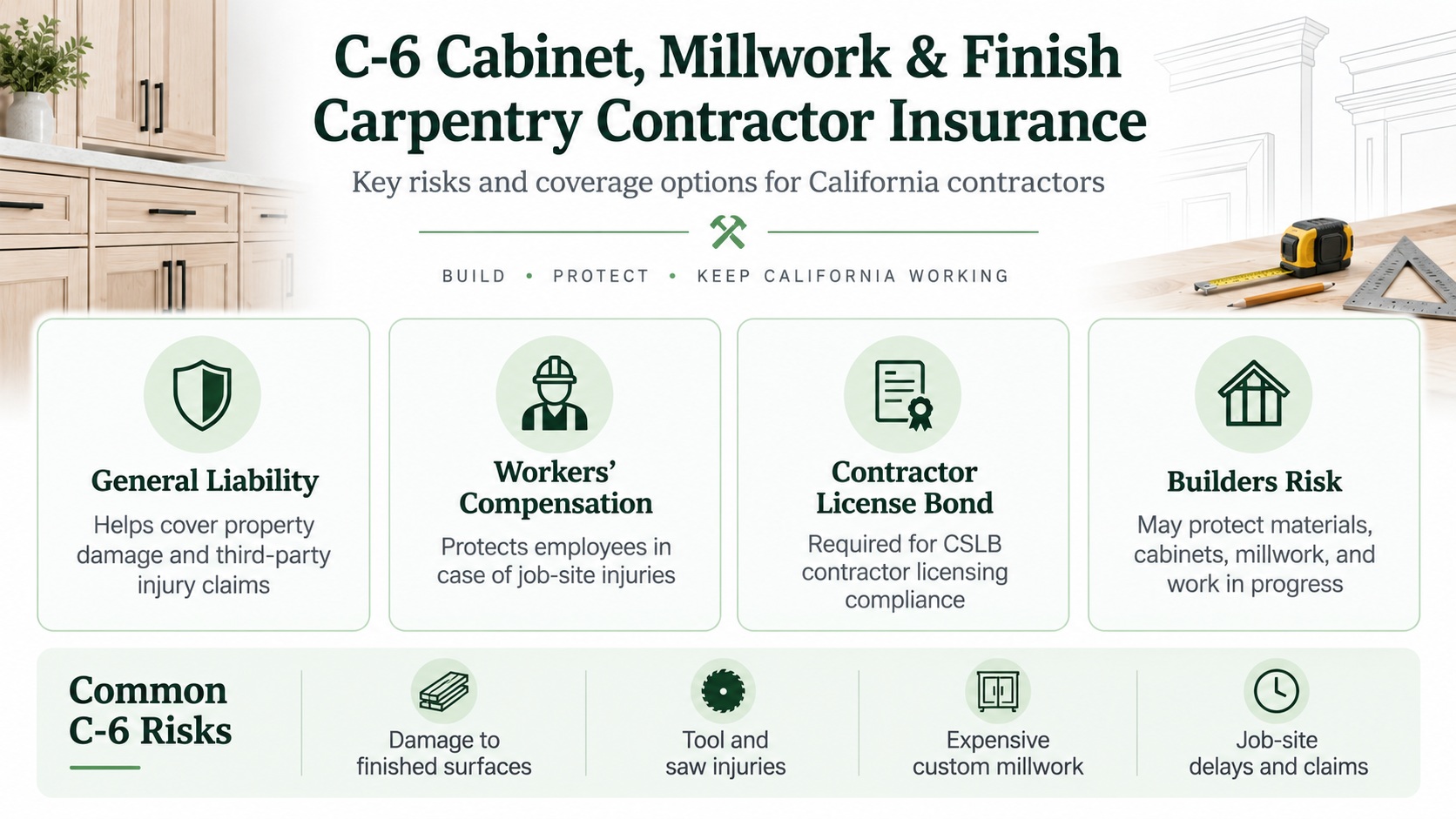
Common coverage considerations include General Liability Insurance, Workers’ Compensation Insurance, the required California Contractor License Bond, and Builders Risk Insurance for qualifying construction projects.
C 6 Cabinet, Millwork & Finish Carpentry Contractor: Quick Answers
If you operate as a C 6 Cabinet Millwork and Finish Carpentry Contractor in California, here are the key insurance, licensing, and millwork construction issues you should know before starting or bidding on a project.
| Common Question | Quick Answer | Learn More |
|---|---|---|
| What does a C-6 contractor do? | C-6 contractors specialize in cabinet installation, custom millwork, built-ins, interior trim, molding, doors, and finish carpentry. | Contractor Insurance |
| What are the biggest risks? | Damage to finished surfaces, expensive cabinetry or millwork, third-party injuries, employee injuries, and claims arising from completed work. | General Liability |
| What insurance does a C-6 contractor need? | Coverage commonly includes General Liability, Workers’ Compensation when applicable, a California Contractor License Bond, and project-specific coverage such as Builders Risk. | View Coverage Options |
| What if an employee is injured? | Workers’ Compensation can help cover qualifying workplace injuries involving saws, nail guns, lifting, falls, and other job-site accidents. | Workers’ Compensation |
| Is a contractor bond required? | California licensed contractors must maintain the contractor license bond required for CSLB licensing. | Contractor Bond |
| What protects cabinetry and materials during construction? | Builders Risk may protect qualifying unfinished construction, cabinetry, millwork, and construction materials against covered losses during the project. | Builders Risk Insurance |
| What is the millwork CSI code? | Millwork construction is generally specified within CSI MasterFormat Division 06, including architectural woodwork and architectural wood casework categories. | See the CSI section below |
What Does a C-6 Cabinet Millwork and Finish Carpentry Contractor Do?
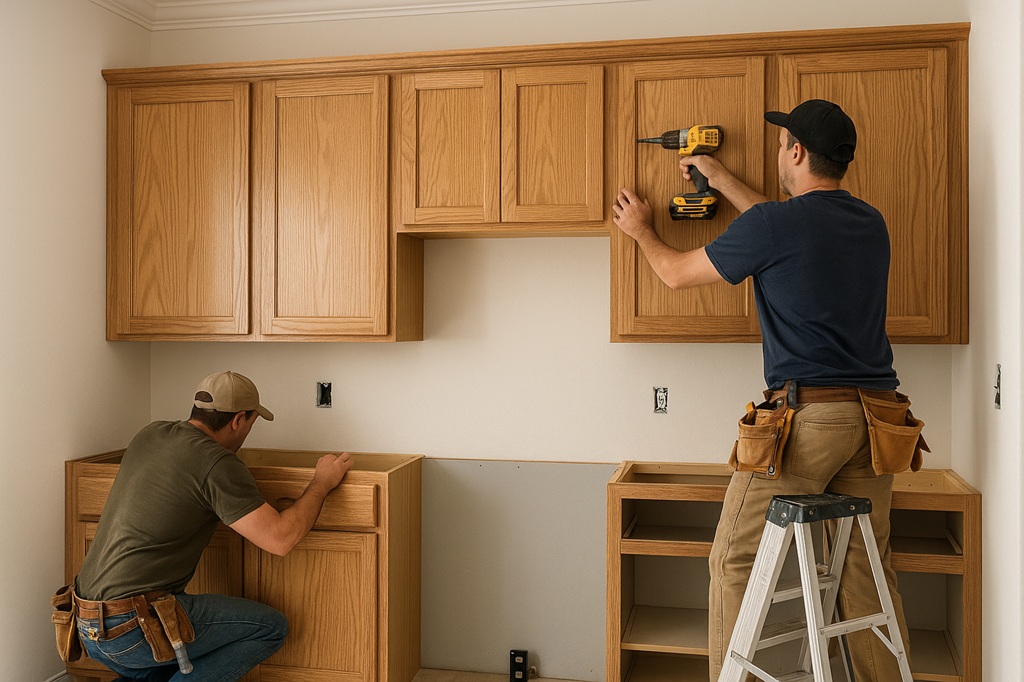
A C-6 Cabinet Millwork and Finish Carpentry Contractor specializes primarily in cabinet, millwork, and finish carpentry installation rather than structural framing.
Because this work is usually performed during the final stages of a project, mistakes can be especially noticeable and expensive to repair.
Typical C-6 work may include:
- Cabinet installation
- Custom millwork
- Built-in furniture and shelving
- Baseboards and crown molding
- Interior trim
- Interior doors and hardware
- Wainscoting
- Decorative wood panels
- Finish carpentry
- Architectural woodwork installation
C-6 contractors may work in residential homes, commercial interiors, offices, retail properties, remodels, and new construction projects.
What Is Millwork Construction?
Millwork construction refers to manufactured or custom-fabricated wood components used as part of the finished architectural design of a building.
Depending on the project, millwork can include:
- Custom cabinets
- Built-in shelving
- Reception desks
- Wall panels
- Wood trim
- Molding
- Custom doors
- Architectural wood features
- Commercial casework
Unlike structural framing, millwork is usually associated with the finished appearance and functionality of an interior space.
Because many millwork components are custom-made and expensive to replace, damage during transportation, installation, or construction can create significant financial exposure for contractors.
Millwork CSI Code: How Is Millwork Classified?
Contractors, architects, estimators, and construction managers may also encounter the term millwork CSI code when reviewing plans, specifications, or construction documents.
CSI MasterFormat organizes construction specifications into divisions and sections.
Architectural woodwork and millwork are generally found under Division 06 – Wood, Plastics, and Composites.
Common specification categories can include:
- 06 40 00 – Architectural Woodwork
- 06 41 00 – Architectural Wood Casework
- Other Division 06 sections depending on the specific product or project scope
The millwork CSI code should not be confused with California’s C-6 contractor classification.
The CSI code is used to organize construction specifications, while the C-6 classification identifies the type of contracting work authorized under California contractor licensing rules.
This distinction is especially important when bidding on commercial projects where both CSLB classifications and CSI specifications may appear in the project documents.
The California Contractors State License Board (CSLB)
regulates contractor licensing and classifications in California.
What Insurance Does a C-6 Cabinet Millwork and Finish Carpentry Contractor Need?
The appropriate insurance program depends on the contractor’s employees, revenue, project size, operations, vehicles, subcontractors, and contract requirements.
For many C-6 contractors, coverage starts with the following protections.
1. General Liability Insurance
General Liability Insurance is an important coverage for finish carpentry and millwork contractors.
C-6 contractors regularly work inside finished homes and commercial properties, where even a small accident may cause expensive property damage.
Examples can include:
- Damaging finished flooring while installing cabinets
- Scratching countertops or walls
- Accidentally damaging customer property
- Third-party injuries at the work area
- Certain claims arising from completed work
For contractors performing high-value millwork construction, liability coverage can be particularly important because replacing custom components may be costly.
2. Workers’ Compensation Insurance
Finish carpentry involves saws, routers, drills, nail guns, lifting, repetitive movements, and other physical job-site activities.
For contractors with employees, Workers’ Compensation Insurance can provide protection related to qualifying workplace injuries.
Common finish carpentry injuries may involve:
- Cuts and lacerations
- Nail gun injuries
- Hand injuries
- Back injuries
- Falls
- Eye injuries
- Equipment-related accidents
California employers generally have workers’ compensation obligations when they employ workers, making this an important part of a C-6 contractor’s insurance program.
3. California Contractor License Bond
Licensed California contractors are required to maintain a contractor license bond.
A Contractor License Bond is different from an insurance policy. It is designed to meet licensing requirements and provide protection to qualifying parties when certain legal or licensing obligations are not met.
For a C-6 Cabinet Millwork and Finish Carpentry Contractor, maintaining the required bond is an important part of keeping the contractor license in good standing.
4. Builders Risk Insurance for Millwork Construction
Custom cabinetry, architectural woodwork, and millwork materials may represent a significant portion of a project’s value.
Builders Risk Insurance may help protect qualifying buildings, construction materials, and property during the course of construction against covered causes of loss.
Depending on the policy and project, coverage considerations may include certain losses involving:
- Materials awaiting installation
- Installed cabinetry and millwork
- Unfinished construction
- Fire
- Theft
- Vandalism
- Certain weather-related events
Coverage varies by policy, so contractors should verify whether specific materials, off-site storage, transit, tools, or equipment are covered.
Why Insurance Matters for Finish Carpentry and Millwork Contractors
Finish carpentry takes place in some of the most visible areas of a construction project.
By the time a C-6 contractor arrives, flooring may already be installed, walls may be painted, countertops may be finished, and expensive fixtures may already be in place.
That means one accident can affect more than the carpenter’s own work.
For example, an installer could:
- Damage a finished hardwood floor
- Break custom cabinetry during installation
- Damage a countertop
- Strike concealed plumbing or electrical components
- Cause accidental damage inside a completed room
The right insurance program helps reduce the financial impact of eligible claims and gives contractors a stronger foundation for working with homeowners, builders, and commercial project managers.
Insurance Can Also Help C-6 Contractors Qualify for More Projects
Insurance is not only about responding to claims.
General contractors, property owners, developers, and commercial construction managers frequently ask subcontractors for proof of insurance before work begins.
A C-6 contractor may be asked to provide:
- Certificate of Insurance
- General Liability coverage
- Workers’ Compensation coverage
- Additional insured documentation
- Contractor bond information
- Project-specific insurance documents
Having these documents ready can help prevent unnecessary delays when bidding or starting a project.
C-6 Contractor Insurance at a Glance
| Contractor Concern | Coverage to Consider | Why It Matters |
|---|---|---|
| Accidental property damage or third-party injury | General Liability Insurance | Helps address eligible liability claims involving bodily injury or property damage |
| Employee injuries | Workers’ Compensation | Helps protect employees and the business from qualifying workplace injury costs |
| California licensing requirements | Contractor License Bond | Required as part of maintaining a California contractor license |
| Construction materials and unfinished work | Builders Risk Insurance | May protect qualifying project property and materials against covered losses |
| Bidding on certain bonded projects | Bid Bond | May be required for certain public or commercial construction bids |
Get Insurance for Your C-6 Cabinet, Millwork and Finish Carpentry Business
Every finish carpentry business is different.
A contractor installing residential cabinets may have very different insurance needs from a company handling large commercial millwork construction projects.
Green State Insurance helps California contractors review coverage options including General Liability, Workers’ Compensation, Contractor Bonds, Builders Risk, and other construction-related insurance.
Whether you are an independent finish carpenter or operate a larger C-6 Cabinet Millwork and Finish Carpentry Contractor business, the goal is to build coverage around the work you actually perform.
Explore California Contractor Insurance Options
Frequently Asked Questions About C-6 Cabinet, Millwork & Finish Carpentry Contractor Insurance
Quick answers to common questions about insurance, licensing, millwork construction, and coverage for California C-6 contractors.