C-9 Drywall Contractor Insurance California: Requirements, Coverage & Costs
A drywall project may look simple once the final paint is applied, but the work behind the walls involves significant risks. A small installation mistake, damaged electrical wiring, moisture issues, poor finishing, employee injuries, or equipment loss can quickly create expensive problems for a C-9 Drywall Contractor.
Many drywall professionals in California face similar challenges: a general contractor requesting proof of insurance before approving a project, a customer expecting protection against workmanship issues, or an unexpected accident affecting business profitability.
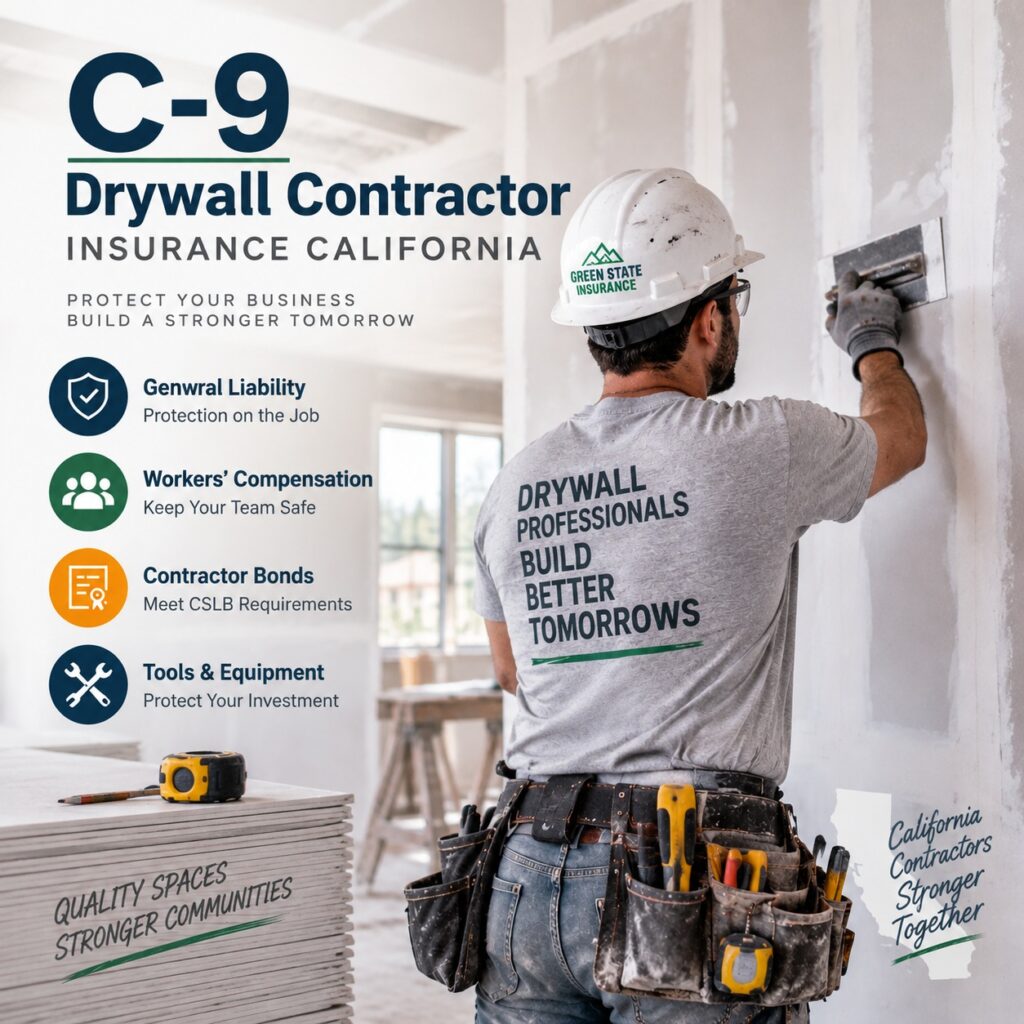
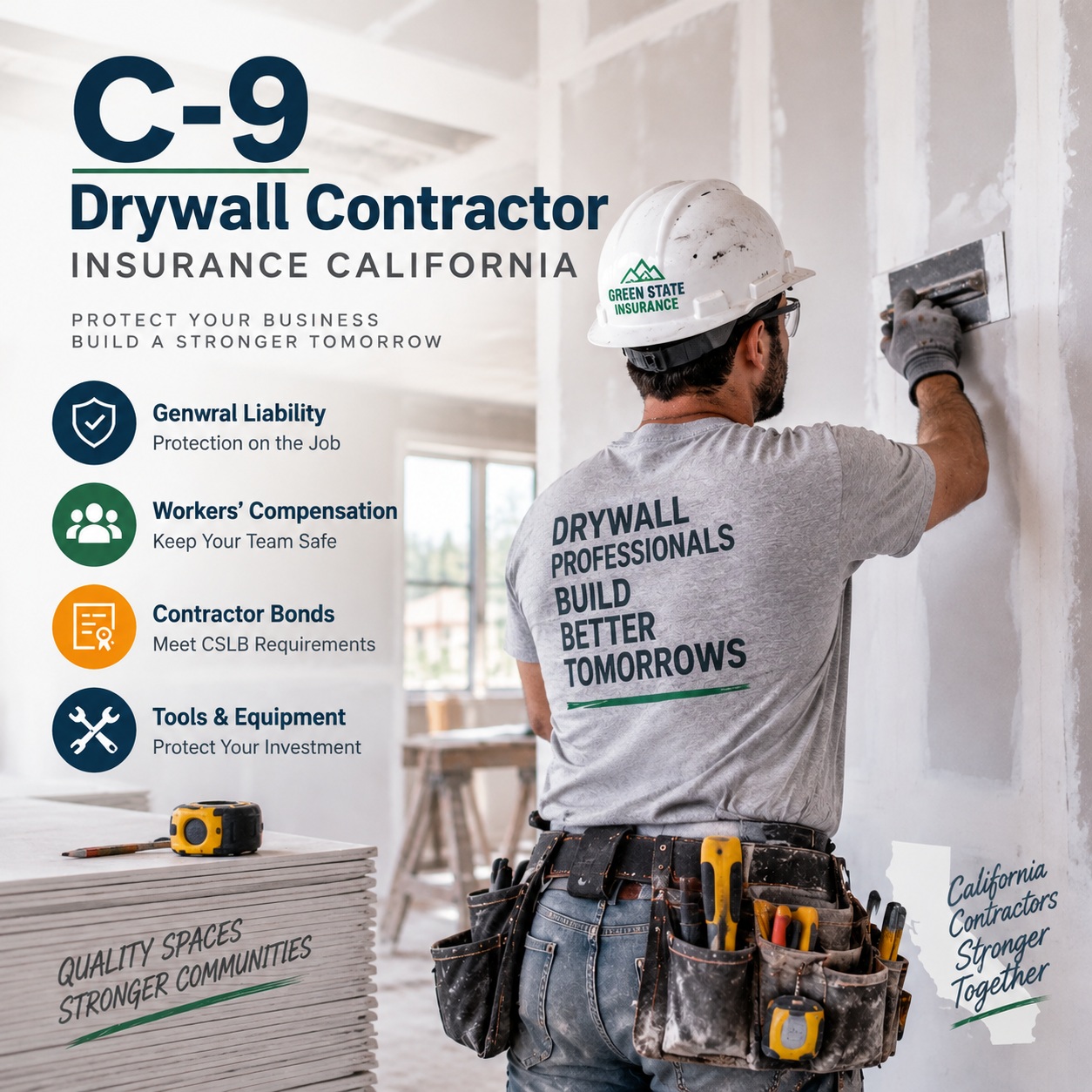
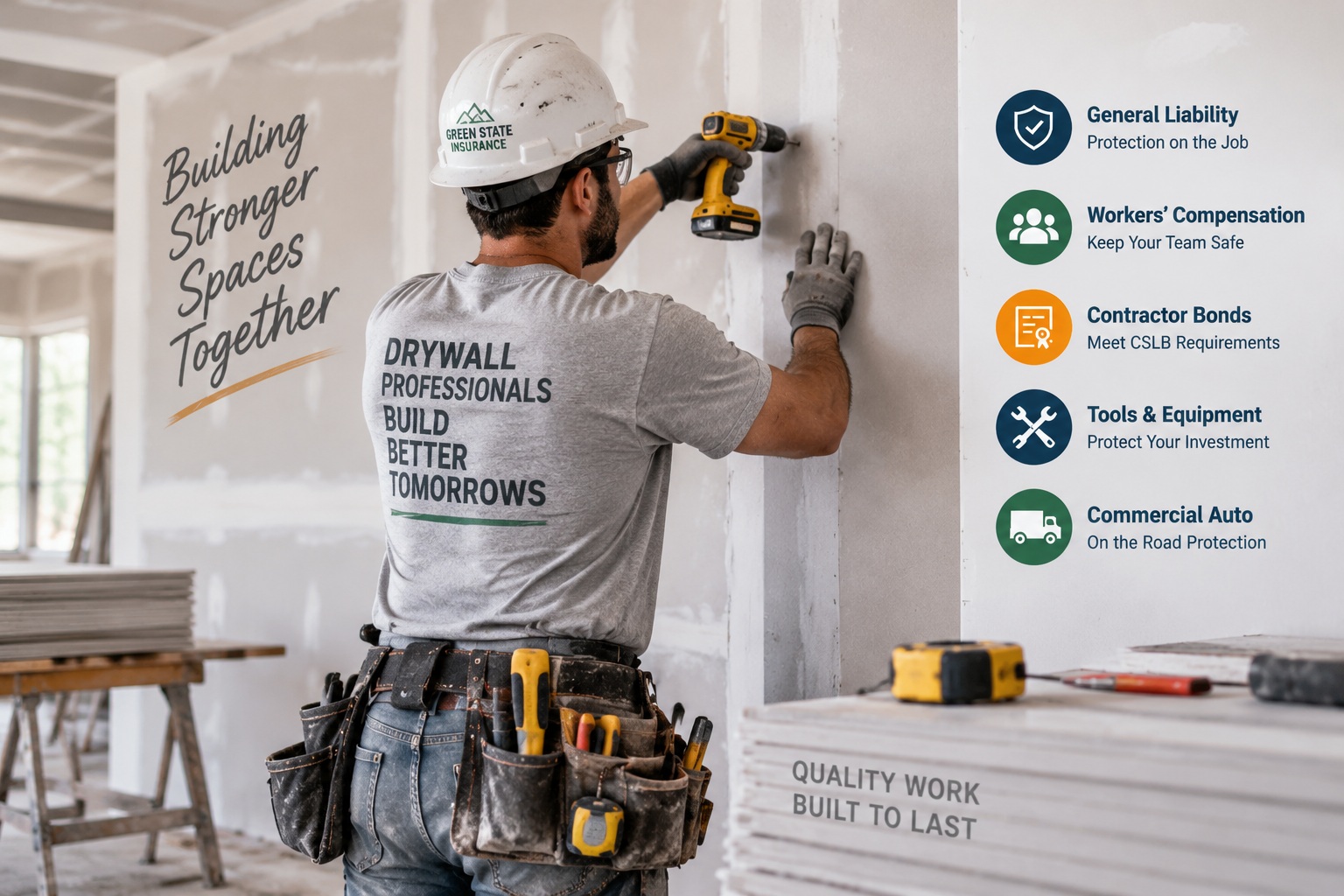
C-9 Drywall Contractor Insurance California helps drywall businesses manage these risks with coverage designed for interior construction work, including general liability insurance, workers’ compensation, contractor bonds, and equipment protection.
Whether you operate a small drywall repair company or manage commercial drywall installation crews, having the right insurance strategy helps protect your business, qualify for more projects, and work confidently across California.
Protect Your California Contracting Business
Explore insurance solutions designed for California contractors, including liability coverage, workers’ compensation, contractor bonds, and specialty trade insurance.
What Is a C-9 Drywall Contractor in California?
The California Contractors State License Board (CSLB) classifies the C-9 Drywall Contractor as a specialty contractor authorized to install and repair gypsum wallboard and related drywall systems.
A C-9 Drywall Contractor commonly performs:
- Drywall installation
- Drywall repair
- Gypsum wallboard installation
- Interior wall finishing
- Texture application
- Ceiling drywall systems
- Commercial drywall projects
- Residential remodeling drywall work
Drywall contractors play an important role in both residential and commercial construction because they create interior walls, partitions, and finished surfaces that define the final appearance of a building.
Because drywall work is often performed near electrical systems, plumbing, flooring, and finished areas, contractors can face unique risks if something goes wrong.
Why Do C-9 Drywall Contractors Need Insurance in California?
Drywall contractors are often one of the final trades working inside a construction project. This means they frequently work around completed surfaces, expensive materials, electrical systems, and other subcontractors.
A single mistake can create damage beyond the drywall itself.
Common situations where a C-9 Drywall Contractor may face claims include:
- Accidentally damaging electrical wiring behind walls
- Creating damage to flooring or finished surfaces during installation
- Customer complaints about cracks, poor finishing, or repairs
- Moisture problems caused by improper installation
- Employee injuries while carrying heavy drywall panels
- Theft or damage involving tools and equipment
Insurance does not eliminate construction risks, but it provides financial protection when unexpected situations happen.
What Insurance Does a C-9 Drywall Contractor Need?
The right insurance program depends on the size of the business, employees, project types, and contract requirements. Most professional drywall contractors need several layers of protection.
General Liability Insurance for Drywall Contractors
General liability insurance is one of the most important coverages for a drywall business.
It helps protect contractors against claims involving:
- Property damage
- Third-party bodily injuries
- Completed work claims
- Accidental damage during installation
For example, a drywall contractor may accidentally damage electrical wiring, flooring, or another finished area while completing interior work. General liability insurance may help respond to eligible claims depending on policy terms.
Many general contractors and builders require drywall subcontractors to provide proof of liability coverage before allowing work to begin.
Completed Operations Coverage for Drywall Contractors
One important concern for drywall contractors is that problems do not always appear immediately.
A customer may discover issues weeks or months after a project is completed, including:
- Cracks appearing after finishing
- Poor texture application
- Damaged surfaces requiring repairs
- Installation-related disputes
Completed operations coverage is an important part of general liability insurance because it may help address certain claims related to completed work, depending on policy terms.
For drywall contractors, this protection can be valuable because many workmanship issues become visible only after painting, flooring installation, or final occupancy.
Workers’ Compensation Insurance for C-9 Drywall Contractors
Drywall installation is physically demanding work.
Employees often:
- Carry large drywall sheets
- Use cutting tools
- Work from ladders or scaffolding
- Perform repetitive overhead tasks
- Handle heavy materials
Common drywall workplace injuries include:
- Shoulder and back injuries
- Cuts from tools
- Falls from ladders
- Hand injuries
- Muscle strain from repetitive work
California businesses with employees generally need workers’ compensation insurance.
Workers’ compensation can help provide:
- Medical treatment benefits
- Lost wage replacement
- Disability benefits
- Employee injury protection
For drywall companies with crews, workers’ compensation is an essential part of protecting both employees and business operations.
Protect Your California Contracting Business
Explore insurance solutions designed for California contractors, including liability coverage, workers’ compensation, contractor bonds, and specialty trade insurance.
C-9 Contractor License Bond Requirements
A licensed C-9 Drywall Contractor must maintain required CSLB contractor bond requirements.
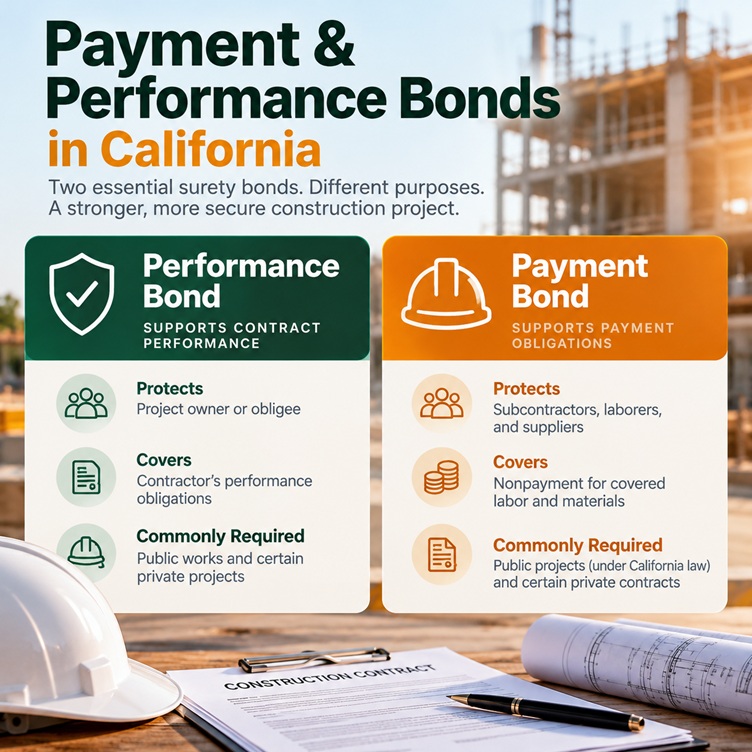
A contractor bond is different from insurance.
Insurance protects the contractor from covered risks, while a surety bond provides financial protection related to contractor obligations and licensing requirements.
Maintaining an active bond helps drywall contractors:
- Keep their CSLB license active
- Meet construction contract requirements
- Build trust with customers
- Qualify for more projects
Contractors should always verify current requirements directly with the California Contractors State License Board (CSLB).
Tools and Equipment Protection for Drywall Contractors
Professional drywall contractors rely on specialized equipment every day.
Common tools include:
- Drywall lifts
- Sanders
- Cutting tools
- Compressors
- Power equipment
- Measuring equipment
Replacing stolen or damaged equipment can delay projects and create unexpected expenses.
Equipment coverage or Inland Marine insurance can help protect valuable tools while they are transported or used at different job sites.
Commercial Auto Insurance for Drywall Businesses
Many drywall contractors use trucks and vans to transport:
- Drywall panels
- Tools
- Materials
- Installation equipment
Personal auto policies usually do not provide the protection needed for vehicles used for business purposes.
Commercial auto insurance helps protect vehicles used during drywall operations.
Insurance Requirements When Working With General Contractors
For many drywall contractors, insurance is not only about protection — it is also about winning projects.
Before allowing a subcontractor to start work, general contractors often request:
- Certificate of Insurance (COI)
- General liability coverage information
- Workers’ compensation verification
- Contractor bond information
Without proper documentation, a skilled drywall contractor may lose project opportunities.
Having insurance ready helps contractors respond faster when new opportunities become available.
How Much Does C-9 Drywall Contractor Insurance Cost in California?
The cost of C-9 Drywall Contractor Insurance California depends on several factors.
Insurance pricing may be affected by:
- Number of employees
- Annual payroll
- Business revenue
- Residential or commercial projects
- Claims history
- Coverage limits
- Type of drywall services provided
A solo drywall repair contractor working on small residential projects will usually have different insurance needs compared with a commercial drywall company managing multiple crews.
Typical coverage considerations include:
Coverage Type Main Pricing Factors General Liability Revenue, project size, claims history Workers’ Compensation Payroll and employee classification Contractor Bond Bond requirements and qualification factors Commercial Auto Vehicle type and business usage Equipment Coverage Value of tools and equipment
Common Risks C-9 Drywall Contractors Should Avoid
Property Damage Claims
Drywall contractors often work around finished areas, electrical systems, plumbing, and expensive interior materials.
A mistake during installation can create repair costs beyond the original drywall work.
Moisture and Water Damage Issues
Improper installation in areas exposed to moisture can lead to damage claims, especially in bathrooms, kitchens, and commercial environments.
Workplace Injuries
Heavy materials, repetitive work, ladders, and power tools create injury risks for drywall crews.
Construction Defect Claims
Customers may raise disputes about:
- Cracks
- Uneven finishes
- Poor texture work
- Installation quality
Proper insurance protection helps contractors manage financial exposure from unexpected claims.
Protect Your C-9 Drywall Contractor Business
Running a successful drywall business requires more than technical skills. Contractors need protection against events that can affect their reputation, finances, and ability to complete projects.
Many California drywall contractors combine:
- General Liability Insurance
- Workers’ Compensation Insurance
- Contractor license bonds
- Equipment protection
to create a stronger risk management strategy.
Green State Insurance helps California contractors find insurance solutions designed around their specific trade requirements.
How to Get C-9 Drywall Contractor Insurance California Coverage
Choosing the right insurance program requires understanding your drywall services, employees, project types, and contract obligations.
Green State Insurance provides insurance solutions for California contractors, including:
- General liability coverage
- Workers’ compensation insurance
- Contractor bonds
- Specialty construction insurance
Whether you perform residential drywall repairs or manage large commercial installation projects, having the right coverage helps protect your business from unexpected risks.
Get a customized California contractor insurance quote today and protect your drywall business.
Frequently Asked Questions
What does a C-9 Drywall Contractor do in California?
A C-9 Drywall Contractor installs, repairs, and finishes gypsum wallboard and related drywall systems for residential and commercial construction projects.
Does a C-9 Drywall Contractor need insurance in California?
Yes. Most drywall contractors need liability insurance, workers’ compensation coverage if they have employees, and additional protection depending on project requirements.
What insurance does a C-9 Drywall Contractor need?
Most C-9 contractors need general liability insurance, workers’ compensation insurance, contractor bonds, commercial auto coverage, and equipment protection depending on their operations.
Is a bond required for a C-9 Drywall Contractor license?
Yes. California licensed contractors must maintain required CSLB bond requirements to keep an active contractor license.
How much does drywall contractor insurance cost?
Costs vary based on business size, payroll, revenue, project type, claims history, and selected coverage limits.
What risks do drywall contractors face?
Common risks include property damage, workplace injuries, equipment loss, moisture issues, and completed work claims.
Can drywall contractors insure their tools and equipment?
Yes. Many drywall contractors use equipment coverage or Inland Marine insurance to help protect valuable tools used across multiple job sites.
California Contractors State License Board (CSLB)