General Liability vs BOP: What’s the Difference?
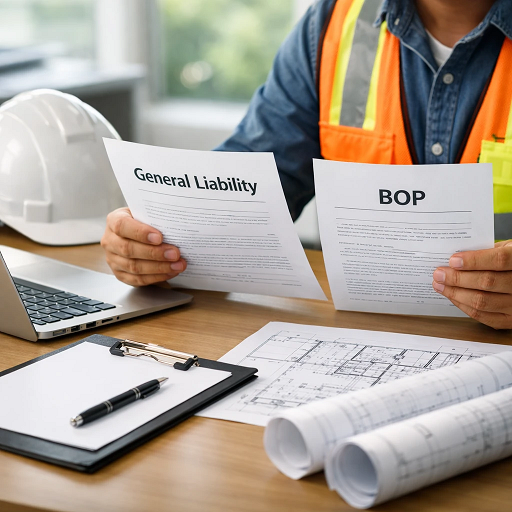
When comparing general liability vs BOP, the biggest difference is the scope of coverage.
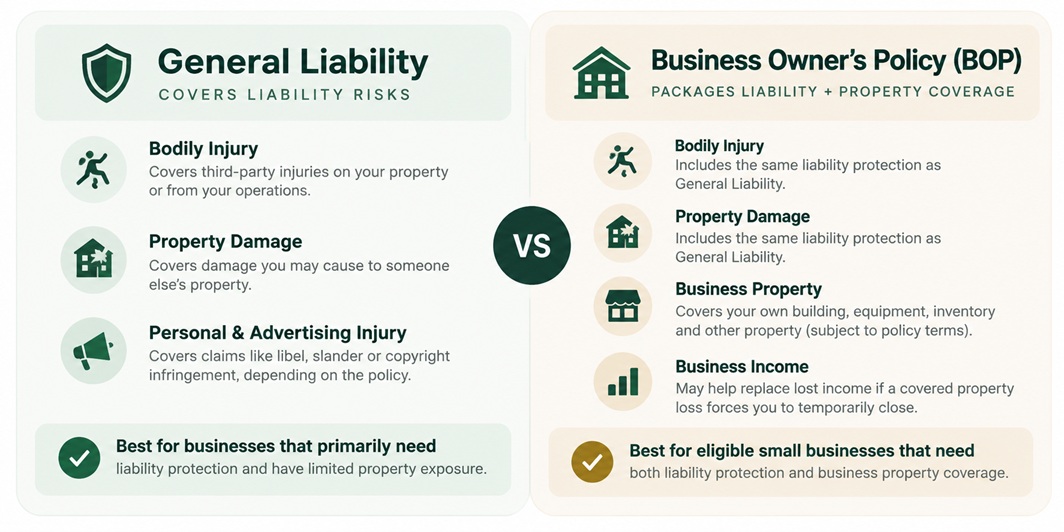
General Liability Insurance primarily addresses certain third-party liability exposures, such as bodily injury, property damage, and personal or advertising injury. A Business Owner’s Policy (BOP), on the other hand, typically combines General Liability with Commercial Property and Business Interruption coverage in one policy.
That means a BOP can provide broader protection for an eligible small business, but that does not automatically make it the right structure for every company. Business operations, property, contracts, employees, industry, and underwriting eligibility can all affect the coverage a business should consider.
This guide explains the key differences between General Liability vs BOP, what each can cover, what is typically excluded, and what California businesses should review before choosing a policy.
General Liability vs BOP at a Glance
The main difference is simple: General Liability focuses on third-party liability risks, while a BOP typically combines liability with business property and business income coverage.
| Your Business Need | General Liability | BOP | What to Know |
|---|---|---|---|
| Third-party bodily injury | ✓ Included | ✓ Included | Liability protection is part of both. |
| Third-party property damage | ✓ Included | ✓ Included | Subject to policy terms and exclusions. |
| Your own business property | — Generally No | ✓ Typically Included | One of the biggest differences. |
| Business income after a covered property loss | — Generally No | ✓ Typically Included | BOP commonly adds Business Income coverage. |
| Employee work-related injuries | Separate | Separate | Review Workers’ Compensation separately. |
| Commercial vehicles | Separate | Separate | Commercial Auto may be needed. |
| Professional errors or advice | Separate | Separate | E&O / Professional Liability may be needed. |
Consider General Liability when:
Your primary concern is third-party liability and you have limited business property exposure.
Consider a BOP when:
Your eligible business needs liability protection plus coverage for business property and business income.
A BOP is not simply “better” General Liability. It packages General Liability with additional coverage, while eligibility and the actual needs of your business determine which policy structure should be reviewed.
What Is General Liability Insurance?
Commercial General Liability, commonly called CGL or General Liability Insurance, is one of the fundamental liability coverages available to businesses.
It can help address certain claims alleging that your business caused bodily injury or property damage to another person.
Depending on the policy, General Liability may also address personal and advertising injury and certain products or completed-operations exposures.
The California Department of Insurance identifies three primary coverage areas within a CGL policy: premises liability, products liability, and completed operations. California Department of Insurance
Third-Party Bodily Injury
Imagine a customer visits your office or business location and is injured in a covered accident.
A General Liability policy may help with eligible medical expenses, legal defense costs, or covered damages, depending on the circumstances and policy terms.
Third-Party Property Damage
Your operations could accidentally damage property belonging to a customer or another third party.
General Liability may respond to certain covered property damage claims.
Products and Completed Operations
Liability does not necessarily end when a product is sold or a job is completed.
Depending on the business and policy, General Liability may provide protection for certain bodily injury or property damage claims arising from products or completed work.
For businesses evaluating this type of protection, Green State offers information about General Liability Insurance and related commercial coverage.
What Is a Business Owner’s Policy (BOP)?
A Business Owner’s Policy, commonly abbreviated as BOP, combines several common business insurance coverages into one package.
A typical BOP combines:
- General Liability Insurance
- Commercial Property Insurance
- Business Interruption / Business Income coverage
This distinction is the heart of the general liability vs BOP comparison.
With standalone General Liability, the primary focus is liability.
With a BOP, liability coverage is combined with protection for certain business property and qualifying interruptions to business operations.
According to the California Department of Insurance, BOPs are specifically designed for small businesses and are subject to underwriting guidelines and eligibility requirements. California Department of Insurance
7 Key Differences Between General Liability and BOP
Understanding these differences can make it easier to determine which policy structure deserves further consideration.
1. Scope of Coverage
General Liability primarily focuses on claims made against your business by third parties.
A BOP includes General Liability but expands the package to include certain property and business interruption coverage.
2. Business Property
This is one of the biggest differences.
General Liability should not be expected to insure your own:
- Furniture
- Computers
- Equipment
- Inventory
- Business personal property
- Building
A BOP generally includes Commercial Property coverage, subject to the policy’s terms, limits, deductibles, and covered causes of loss.
3. Business Interruption
A standalone General Liability policy does not normally provide Business Income coverage.
A BOP typically includes Business Interruption or Business Income coverage.
If a covered property loss forces an eligible business to temporarily suspend operations, this coverage may help with certain lost income and continuing expenses, subject to policy terms.
4. Eligibility
General Liability coverage is available across a broad range of business types, although underwriting requirements vary.
BOP eligibility can be more restrictive.
Factors may include:
- Type of business
- Revenue
- Location
- Building characteristics
- Square footage
- Business activities
- Property exposure
- Claims history
The California Department of Insurance specifically notes that BOPs have underwriting guidelines and describes them as particularly appropriate for qualifying small “main street” businesses. California Department of Insurance
5. Policy Structure
General Liability can be purchased as standalone liability coverage.
A BOP packages multiple types of protection together.
This can make policy administration simpler for an eligible small business that needs both liability and property coverage.
6. Cost Factors
The price of either policy depends on the individual business.
General Liability pricing can be affected by factors such as:
- Industry
- Operations
- Revenue
- Payroll
- Location
- Claims history
- Coverage limits
- Subcontractor exposure
A BOP may also consider property-related factors such as building characteristics, equipment, inventory, property values, and selected deductibles.
Therefore, comparing General Liability vs BOP cost based only on a generic online average can be misleading.
7. What You Need to Protect
This is ultimately the most important difference.
A business primarily concerned with third-party liability may have different insurance needs from a business that also has a physical location, inventory, furniture, computers, equipment, or other valuable property.
The policy structure should reflect the exposures of the actual business.
General Liability vs BOP: Coverage Comparison
Here is a more practical way to compare the two.
General Liability May Address
Certain covered claims involving:
- Customer injuries
- Third-party property damage
- Premises liability
- Products liability
- Completed operations
- Personal and advertising injury
- Legal defense for covered liability claims
A BOP May Add
In addition to General Liability, a BOP commonly includes:
- Commercial Property
- Business Personal Property
- Certain building coverage when applicable
- Business Income / Business Interruption
- Other coverage or endorsements depending on the policy
The exact coverage varies by insurer and policy. A BOP should not be assumed to cover every risk faced by a business.
General Liability vs BOP Example
Consider two different small businesses.
Business A: Independent Consultant
The consultant works remotely, has limited business property, does not operate a retail location, and primarily wants protection against certain third-party liability claims.
Their insurance needs may be different from a business with substantial physical property.
Professional services could also create an E&O exposure that General Liability does not necessarily address.
Business B: Retail Store
The store has customers entering the premises, furniture, computers, equipment, inventory, and a physical business location.
This business has both liability and property exposures.
If it meets the insurer’s eligibility requirements, a BOP may allow it to combine several of those coverages into one policy.
The important question is therefore not simply:
“Is a BOP better than General Liability?”
It is:
“What risks does my business actually need to insure?”
What Does General Liability Not Cover?
General Liability is broad liability protection, but it is not designed to cover every business exposure.
Depending on the policy, separate coverage may be needed for several important risks.
Your Own Business Property
General Liability generally does not insure your own office equipment, inventory, furniture, or building against ordinary property losses.
This is one reason businesses with meaningful property exposure may consider a BOP or separate Commercial Property coverage.
Employee Work-Related Injuries
General Liability does not replace Workers’ Compensation.
California employers should separately review their Workers’ Compensation obligations. The California Department of Insurance’s commercial insurance guide notes the state requirement for employers to provide Workers’ Compensation insurance under California Labor Code Section 3700. California Department of Insurance
Green State provides additional information about Workers’ Compensation Insurance.
Commercial Vehicles
Vehicles used for business can create separate auto exposures.
Commercial Auto coverage may be necessary depending on vehicle ownership and use.
Professional Errors
General Liability is not designed as a replacement for Professional Liability or E&O Insurance.
Businesses providing professional advice, consulting, design, recommendations, or specialized services should separately review those exposures.
What Does a BOP Not Automatically Cover?
A BOP provides broader packaged coverage than standalone General Liability, but it still does not mean “everything is covered.”
Depending on the business and policy, separate insurance may still be needed for:
- Workers’ Compensation
- Commercial Auto
- Professional Liability / E&O
- Cyber Liability
- Employment Practices Liability
- Commercial Umbrella
- Certain tools or mobile equipment
- Specialized property
- Other industry-specific exposures
The exact exclusions and available endorsements vary by insurer and policy.
Businesses should therefore avoid assuming that purchasing a BOP eliminates the need to review other risks.
General Liability vs BOP for Contractors
The comparison can become particularly important for contractors because construction businesses may have a combination of jobsite liability, tools, equipment, vehicles, employees, completed work, and contractual insurance requirements.
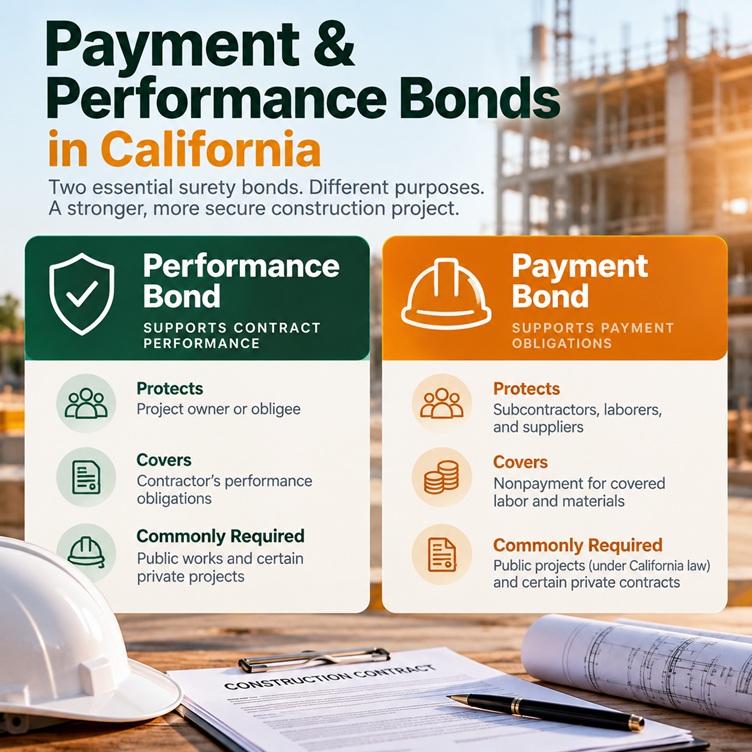
A contractor seeking general contractor insurance may need General Liability because of third-party bodily injury, property damage, and completed-operations exposures.
However, the contractor may also own:
- Tools
- Office equipment
- Materials
- Business property
- Vehicles
- Specialized equipment
That does not automatically mean a standard BOP covers every one of these exposures.
For example, tools and equipment that frequently move between jobsites may require coverage different from property that remains at a fixed business location.
Similarly, contractor liability insurance does not replace Workers’ Compensation, Commercial Auto, Builders Risk, or other policies that may apply to a construction business.
Contractors comparing insurance options should therefore evaluate their broader California contractor insurance needs instead of selecting a policy based only on whether it is labeled General Liability or BOP.
General Liability vs BOP for Small Businesses
For many small businesses, the decision comes down to the combination of liability and property exposure.
A business may want to review General Liability when it:
- Interacts with customers or clients
- Performs work at customer locations
- Could accidentally damage third-party property
- Has contractual liability insurance requirements
- Has relatively limited business property
A BOP may deserve consideration when an eligible business also has:
- A physical office or retail location
- Furniture and equipment
- Computers
- Inventory
- Other business personal property
- Exposure to business interruption following a covered property loss
Eligibility still matters. Not every business will qualify for every BOP program.
General Liability vs BOP Cost
There is no universal answer to whether General Liability or a BOP will cost less.
A General Liability policy covers a narrower category of exposure than a typical BOP, but premium depends on the actual risk being insured.
Factors that may affect General Liability pricing include:
- Business classification
- Revenue
- Payroll
- Location
- Claims history
- Limits
- Operations
- Products or completed work
- Subcontractor exposure
BOP pricing may additionally consider:
- Property values
- Building characteristics
- Equipment
- Inventory
- Business income exposure
- Deductibles
- Selected endorsements
For a qualifying business that already needs both liability and property coverage, packaging coverage in a BOP may be worth comparing with purchasing separate policies.
The actual quotes and policy terms should be compared rather than assuming one structure will always be cheaper.
General Liability vs BOP: Which Should You Consider?
Start with your exposures rather than the name of the policy.
General Liability may be worth reviewing if:
Your primary concern is certain third-party liability claims and you have limited need for commercial property coverage.
A BOP may be worth reviewing if:
Your eligible small business needs General Liability plus protection for business property and Business Income exposure.
But the decision should also account for risks that neither option necessarily addresses by itself.
Ask:
- Do customers visit my business?
- Do I work at customer locations?
- Do I own valuable equipment?
- Do I maintain inventory?
- Do I own or lease a physical location?
- Could a covered property loss interrupt my operations?
- Do I have employees?
- Do I use vehicles for business?
- Do I provide professional advice or designs?
- Do my contracts require specific insurance?
The answers create a much better starting point than simply asking which policy has more coverage.
General Liability vs BOP Checklist
Before requesting a quote, gather basic information about your business.
Business Operations
Describe exactly what the company does and where work is performed.
Revenue and Payroll
Prepare current or estimated annual figures when requested.
Business Property
Estimate the value of furniture, equipment, computers, inventory, and other property.
Business Location
Identify whether you own, lease, or work primarily from customer locations.
Employees
Review employee count, payroll, and job duties.
Vehicles
Determine whether vehicles are owned, leased, hired, or used for business.
Contracts
Check insurance requirements in leases, customer agreements, and other contracts.
Additional Exposures
Identify professional services, mobile equipment, tools, cyber risks, or other exposures that may require separate coverage.
This information can help determine whether standalone General Liability, a BOP, or a broader combination of commercial policies should be evaluated.
Frequently Asked Questions About General Liability vs BOP
Is a BOP the same as General Liability Insurance?
No. General Liability is liability coverage. A BOP typically includes General Liability along with Commercial Property and Business Interruption coverage. California Department of Insurance
Does a BOP include General Liability Insurance?
A standard BOP is generally structured to include General Liability as part of the package, together with property and business interruption coverage. Policy terms and available coverage vary.
Is a BOP better than General Liability?
Neither policy structure is automatically the right fit for every business. The appropriate option depends on the business’s liability, property, operational, contractual, and other exposures.
Does General Liability cover my business property?
General Liability generally focuses on liability to third parties rather than damage to the insured business’s own property. Commercial Property coverage may be needed for business property.
Does a BOP cover Workers’ Compensation?
Workers’ Compensation should generally be reviewed separately rather than assumed to be included in a standard BOP.
Does a BOP cover commercial vehicles?
A standard BOP should not be assumed to provide Commercial Auto coverage. Businesses using vehicles should separately evaluate their auto exposures.
Does a BOP include E&O Insurance?
Professional Liability or E&O should not automatically be assumed to be part of a standard BOP. Businesses providing professional services should review this exposure separately.
Can contractors get a BOP?
Some contractors may qualify for BOP programs, but eligibility and available coverage depend on the insurer, trade, operations, property exposure, and underwriting requirements. A BOP should not be assumed to cover every construction-related exposure.
Is General Liability required in California?
There is not a single blanket rule requiring every California business to carry General Liability Insurance. Requirements may instead arise from contracts, leases, licensing circumstances, clients, project owners, or other business arrangements.
How do I choose between General Liability and a BOP?
Start by identifying both your liability and property exposures. If you primarily need liability protection, standalone General Liability may be worth evaluating. If an eligible business also needs property and business interruption protection, comparing a BOP may make sense.
Review Your Business Insurance Needs
The key difference in the general liability vs BOP comparison is straightforward: General Liability focuses primarily on certain third-party liability exposures, while a BOP typically combines General Liability with Commercial Property and Business Interruption coverage.
The more important question is whether either option addresses the actual risks of your business.
Green State Insurance can help California businesses review their operations, property, employees, contracts, and other exposures when evaluating commercial insurance options.
Explore General Liability Insurance if third-party liability protection is one of your primary concerns.
Construction businesses can also review general liability insurance for contractors alongside other coverage that may apply to their operations.
Businesses with employees can review Workers’ Compensation Insurance.
For additional commercial coverage options, explore Green State Insurance Services.
Green State Insurance: (949) 432-4805