Insurance for High Risk Construction Work in California
Construction work comes with risk, but some trades face significantly greater exposure than others. Working at height, operating heavy equipment, performing demolition, handling electrical systems, or completing structural work can increase the potential for serious injuries, property damage, and costly claims.
For contractors working in these environments, insurance for high risk construction work should reflect the actual operations of the business. The right coverage may include general liability, workers’ compensation, commercial auto, builders risk, tools and equipment coverage, and contractor bonds depending on the trade, employees, vehicles, contracts, and projects involved.
High-risk contractors may also face more detailed underwriting because insurers need to understand exactly what work is being performed and how that risk is managed.
What Is Considered High Risk Construction Work?
There is no single insurance definition that automatically classifies every construction activity as “high risk.” Insurers evaluate contractors based on the type of work performed, jobsite conditions, claims history, payroll, subcontractor use, project size, safety practices, and other underwriting factors.
Construction operations that may involve greater exposure can include:
- Roofing and work performed at height
- Demolition
- Structural steel and framing
- Concrete work
- Excavation and trenching
- Electrical contracting
- Welding and hot work
- HVAC installation
- Heavy equipment operations
- Asbestos-related work
- Large commercial construction projects
The level of risk can also change from one contractor to another. Two companies in the same trade may receive different insurance terms based on their operations, employees, project history, safety controls, and loss experience.
Why High Risk Contractors Can Be Harder to Insure
Insurance companies evaluate the likelihood and potential severity of a claim.
For a contractor performing relatively low-risk work, the potential for catastrophic injury or major property damage may be limited. High-risk construction operations can create much larger exposures.
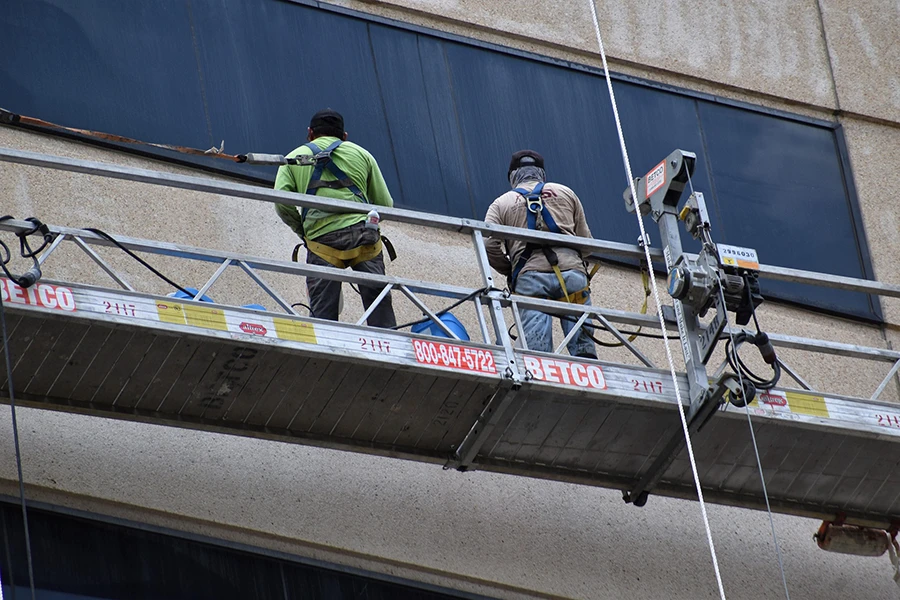
For example, a fall from a roof can result in a serious workers’ compensation claim. Demolition can damage neighboring property. Excavation can affect underground utilities. Welding can create fire exposure. Structural work can result in significant property damage if something goes wrong.
As risk increases, insurers may look more closely at:
- Years in business
- Contractor license and classification
- Type of construction work
- Residential vs. commercial projects
- Annual revenue
- Employee payroll
- Workers’ compensation class codes
- Subcontractor costs
- Claims and loss history
- Maximum project size
- Work performed at height
- Safety procedures and training
- Use of heavy equipment
- Certificates of Insurance from subcontractors
This is why insurance for high risk construction work is rarely a one-size-fits-all product.
What Insurance Do High Risk Construction Contractors Need?
The appropriate insurance package depends on your business and contracts. High-risk contractors commonly consider several different types of coverage.
1. General Liability Insurance
General liability insurance can help protect a construction business against certain third-party bodily injury and property damage claims.
For example, a claim could arise if your operations damage a client’s property or a third party is injured around the work area.
For high-risk trades, insurers may want detailed information about the work you perform before offering coverage. Policy exclusions, classifications, limits, and subcontractor requirements should be reviewed carefully.
2. Workers’ Compensation Insurance
Workers’ compensation is especially important for construction businesses because jobsite injuries can be serious and expensive.
California employers, including construction employers, are generally required to carry workers’ compensation when they have employees. Current CSLB requirements also specify that C-8 Concrete, C-20 HVAC, C-22 Asbestos Abatement, C-39 Roofing and C-61/D-49 Tree Service contractors must carry workers’ compensation insurance or valid self-insurance even if they do not have employees. CSLB
This is particularly relevant to high risk construction work, where falls, equipment injuries, lifting injuries, cuts, burns, and other workplace accidents can result in substantial claims.
3. Builders Risk Insurance
Builders risk insurance is different from general liability.
Rather than primarily addressing third-party liability claims, builders risk is designed to protect property associated with a construction project while it is being built or renovated, subject to the policy’s terms, exclusions, and limits.
Depending on the project and policy, coverage may apply to buildings under construction and certain materials or property associated with the project.
This can be particularly important when a contractor is working on a project where damage from fire, theft, vandalism, or another covered cause of loss could create a substantial financial setback.
4. Commercial Auto Insurance
Construction companies often use trucks, vans, trailers, and other vehicles to move employees, tools, and materials between jobsites.
Personal auto insurance generally is not designed to cover vehicles being used primarily for business operations. Contractors should evaluate commercial auto coverage based on vehicle ownership and use.
5. Tools and Equipment / Inland Marine Coverage
Construction equipment can be expensive to replace.
Tools may travel between jobsites, remain temporarily at a project, or be transported in work vehicles. Depending on the policy, contractors may use inland marine or contractor equipment coverage to protect certain mobile tools and equipment against covered losses.
6. Contractor License Bond
Insurance and bonds are not the same thing.
California contractors generally must maintain a contractor’s bond as part of maintaining an active contractor license. CSLB currently states that the contractor’s bond amount is $25,000. CSLB
A contractor bond should therefore not be treated as a replacement for general liability or workers’ compensation insurance.
High Risk Construction Trades and Their Common Exposures
Different trades create different insurance concerns.
| High-Risk Trade | Examples of Major Exposures | Coverage to Consider |
|---|---|---|
| Roofing | Falls, property damage, water intrusion | General Liability, Workers’ Comp, Commercial Auto |
| Demolition | Structural damage, debris, neighboring property damage | General Liability, Workers’ Comp, Equipment Coverage |
| Concrete | Heavy equipment, employee injuries, property damage | General Liability, Workers’ Comp, Commercial Auto |
| Electrical | Fire, property damage, electrical injuries | General Liability, Workers’ Comp, Commercial Auto |
| Structural Steel | Falls, lifting operations, severe injuries | General Liability, Workers’ Comp, Equipment Coverage |
| Excavation | Underground utilities, trench hazards, property damage | General Liability, Workers’ Comp, Equipment Coverage |
| Welding | Fire, burns, property damage | General Liability, Workers’ Comp |
| HVAC | Property damage, employee injuries, installation exposures | General Liability, Workers’ Comp, Commercial Auto |
The exact policies and limits needed depend on the contractor’s operations and policy terms.
Why General Liability Alone May Not Be Enough
One of the biggest mistakes contractors can make is assuming a general liability policy protects against every construction-related loss.
It doesn’t.
General liability and workers’ compensation address different exposures. Commercial auto addresses vehicle-related risks. Builders risk addresses certain property exposures during construction. Equipment coverage may address tools and mobile equipment.
That is why contractors looking for insurance for high risk construction work should evaluate their overall risk instead of focusing on a single policy.
How Subcontractors Affect Your Insurance Risk
Using subcontractors can also affect underwriting.
An insurance company may want to know:
- How much work you subcontract
- What trades your subcontractors perform
- Whether subcontractors carry their own insurance
- Whether you collect Certificates of Insurance
- Whether contracts require additional insured status
- Whether subcontractors maintain workers’ compensation
Maintaining documentation from subcontractors can be an important part of a contractor’s insurance and risk-management process.
Certificates of Insurance for High Risk Construction Projects
General contractors, developers, property owners, and project managers may require proof of insurance before allowing a contractor onto a jobsite.
A Certificate of Insurance (COI) provides evidence of certain insurance coverage in effect at the time the certificate is issued.
Large or higher-risk projects may also impose contractual insurance requirements involving:
- Minimum liability limits
- Additional insured status
- Workers’ compensation
- Commercial auto
- Waiver of subrogation
- Primary and non-contributory wording
Contractors should review these requirements before beginning work rather than discovering after a contract is signed that their current insurance does not satisfy the project requirements.
How Much Does Insurance for High Risk Construction Work Cost?
There is no single price for insurance for high risk construction work.
Premiums can vary significantly because insurers evaluate the actual risk presented by each business.
Common pricing factors include:
- Type of construction trade
- Annual payroll
- Annual revenue
- Number of employees
- Subcontractor costs
- Years in business
- Claims history
- Project size
- Residential vs. commercial work
- Work performed at height
- Geographic area
- Vehicles and equipment
- Coverage limits and deductibles
A roofing company with crews working at height may therefore be evaluated differently from a flooring contractor working primarily inside residential properties.
Why High Risk Construction Insurance Can Cost More
Higher-risk work can lead to claims that are both more frequent and more severe.
A minor property damage claim and a serious fall from height can have dramatically different financial consequences. Insurers account for those differences when underwriting a construction business.
However, being considered higher risk does not automatically mean every contractor will receive the same premium or coverage terms.
Experience, safety practices, loss history, payroll, project selection, subcontractor management, and other factors can all affect underwriting.
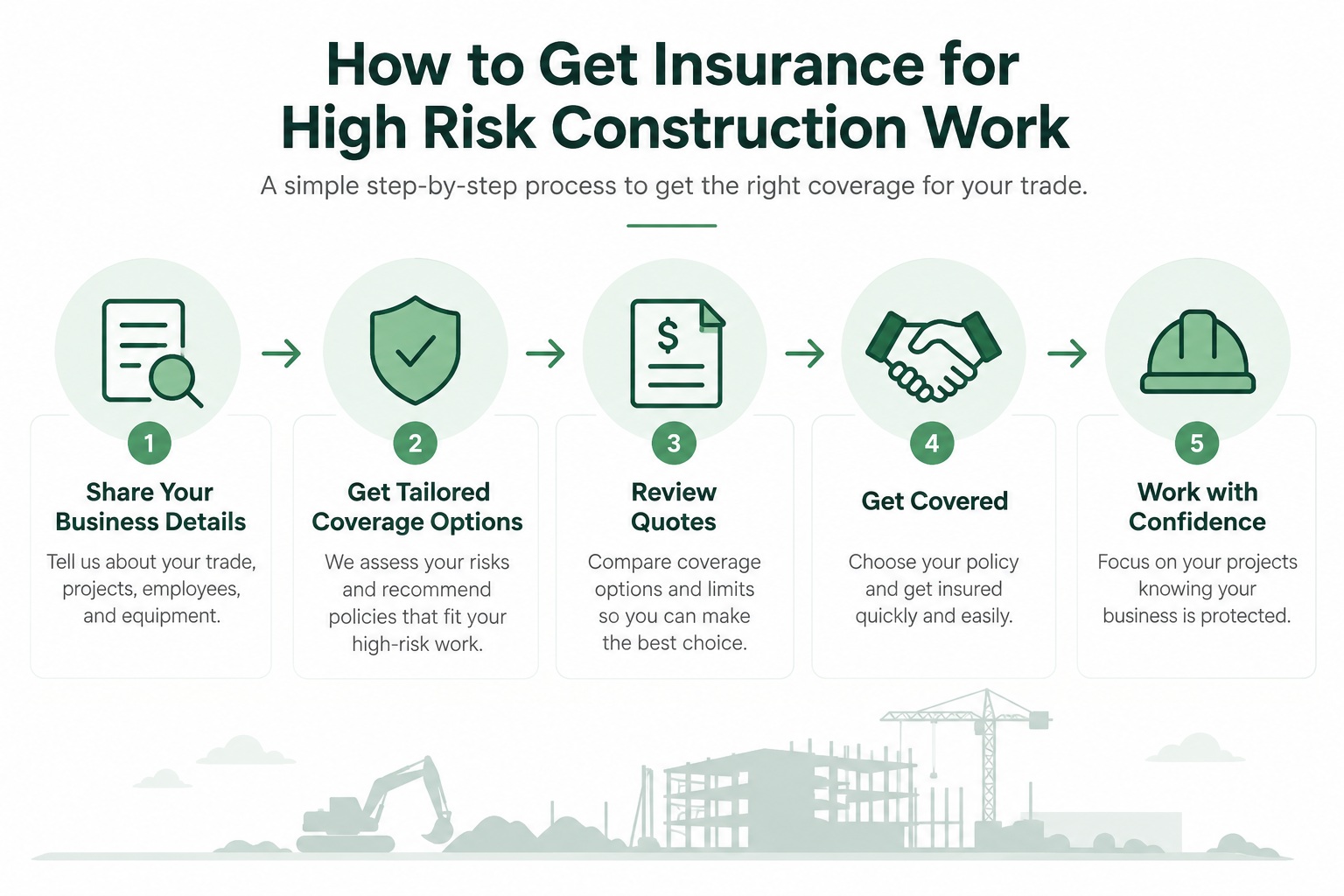
How to Prepare for a High Risk Contractor Insurance Quote
Providing accurate information from the beginning can make the quoting process easier.
Before requesting coverage, consider gathering:
- Contractor license information
- Detailed description of operations
- Annual revenue
- Employee payroll
- Employee classifications
- Subcontractor costs
- Loss runs or claims history
- Vehicle information
- Largest current and expected projects
- Current insurance certificates and policy information
- Safety procedures or training information
- Contract insurance requirements
For high-risk operations, simply describing the business as “construction” or “general contracting” may not provide an insurer with enough information.
Be specific about the work you actually perform.

California Insurance Requirements Contractors Should Know
Insurance requirements should not be generalized across every California contractor.
For example, California’s CSLB states that commercial general liability insurance is not generally required for every contractor, while workers’ compensation requirements depend on factors including employees and contractor classification. CSLB
CSLB currently identifies C-8 Concrete, C-20 HVAC, C-22 Asbestos Abatement, C-39 Roofing and C-61/D-49 Tree Service among classifications that cannot use the standard workers’ compensation exemption. CSLB
California licensed contractors must also maintain the applicable contractor bond requirements for an active license. CSLB
For current licensing and workers’ compensation requirements, contractors can review the official California Contractors State License Board Workers’ Compensation Requirements.
How Green State Insurance Helps High Risk Contractors
High-risk construction businesses often need more than a generic insurance quote.
Green State Insurance can help California contractors review their operations and identify insurance options based on their trade, employees, payroll, subcontractor exposure, vehicles, equipment, and project requirements.
Whether you are working in roofing, concrete, demolition, electrical, structural work, excavation, or another construction trade, the goal is to build coverage around the work your company actually performs.
Frequently Asked Questions
What is insurance for high risk construction work?
Insurance for high risk construction work refers to insurance coverage selected for contractors whose operations involve greater potential for injuries, property damage, or other significant claims. The appropriate coverage depends on the trade and may include general liability, workers’ compensation, commercial auto, builders risk, and equipment coverage.
What construction trades are considered high risk?
There is no universal list used by every insurer. Roofing, demolition, structural steel, excavation, welding, concrete and other operations involving heights, heavy equipment or significant property exposures may receive additional underwriting scrutiny.
Is high risk contractor insurance more expensive?
It can be. Insurance premiums depend on factors such as trade, payroll, revenue, claims history, project size, subcontractor use, safety practices and required limits. Contractors performing operations with greater potential claim severity may face different rates or underwriting requirements.
Is general liability enough for a high risk contractor?
Not necessarily. General liability addresses certain third-party bodily injury and property damage claims, but it does not replace workers’ compensation, commercial auto, builders risk, equipment coverage or bonds.
Do California contractors need workers’ compensation insurance?
California employers generally must maintain workers’ compensation insurance when they have employees. In addition, CSLB currently requires certain classifications—including C-8, C-20, C-22, C-39 and C-61/D-49—to maintain workers’ compensation or qualifying self-insurance regardless of whether they have employees. CSLB
Can a high risk contractor still get insurance after claims?
Past claims can affect underwriting, pricing and available options, but they are only part of the information an insurer may consider. The outcome depends on the individual business, loss history, operations and insurer.
Protect Your Construction Business Before the Next Project
High-risk construction operations require a closer look at insurance because one policy may not address every exposure.
Understanding your trade, employees, subcontractors, vehicles, equipment and contract requirements is the first step toward identifying appropriate coverage.
If you need insurance for high risk construction work in California, Green State Insurance can help you review coverage options based on your actual construction operations.